Law firms
Law-Firm Office Lease Renewals
Revisit the workplace and the commercial terms together. A renewal can be an opportunity to make the existing office work better for the firm.
Explore the guide Start a conversation
Law firms / Office right-sizing
Last updated
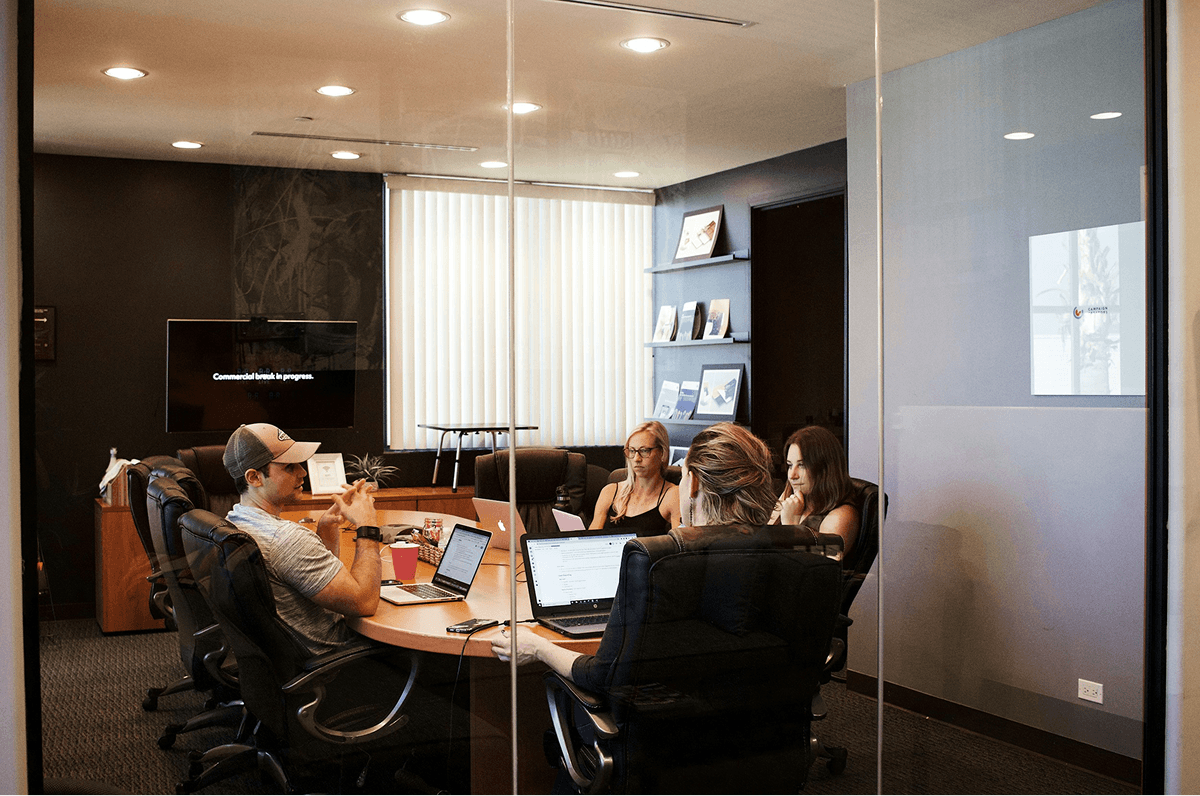
Right-sizing a law firm means adjusting its office space to fit its operational needs and culture, whether that involves expansion, contraction, or a different layout. Start with an architect’s space program to identify the offices, workstations, meeting rooms, and other functions the firm needs and calculate the area required. Office hoteling, standardized office sizes, smaller file rooms, and spaces with multiple uses can improve flexibility and reduce the overall footprint. Market conditions, improvement allowances, construction costs, and lease restrictions help determine whether to modify the existing office or relocate. Union Street can review your lease for rights to return or sublet space, survey smaller suites and prepare a financial comparison using the architect’s plan.
This page provides general information about the commercial leasing process. Consult your attorney for a legal perspective on your lease documentation. Nothing contained herein should be construed as legal guidance.
01
Union Street can coordinate with your architect to define how much space each practice group needs on the days its attorneys are in the office. A space program outlines the various space functions of the firm (i.e. perimeter offices, workstations, paralegal offices, reception, meeting rooms, etc.) and allocates an area to each space to come up with a total usable area. A load factor can then be applied to a usable area to get to a rentable area. The load factor is the amount of common area within a building that is proportionately allocated to a space (as a percentage) to get to its rentable area. The rentable area is typically the square feet of a space that is advertised and is used as the multiple for rental rates.
Right-sizing can include expansion as well as contraction. It is adjusting the amount, configuration and mix of spaces to match the firm’s operational, cultural, and business needs. There is no one-size-fits all equation or methodology for right-sizing.
02
Office Hoteling. With the shift of many employees and lawyers desiring to work more from home, the need for dedicated workspaces and offices has shifted. Law firms can leverage “office hoteling”, which is the shared use of an office space that can either be coordinated through a reservation system or on a first-come-first serve basis. With shared office use, your firm could reduce its overall private office count; thereby reducing its rent burden.
Standardizing office size. The traditional “partner office” that was often 50% to 100% larger than an “associate office” is also being reevaluated. Firms moving to a more standardized office size are able to often reduce their overall footprint, allocate more space to common spaces like lounges or meeting areas/conference rooms, and get more flexibility (and less arguments) in office assignments.
Repurposing or eliminating spaces. Libraries aren’t needed as books become online resources. Libraries are often eliminated or converted into lounges or meeting spaces. File rooms are shrinking and even disappearing as files are digitized.
Hybrid-space functions. Combining uses and opening up spaces to accommodate more social and hospitality opportunities within the office. Rooms that can function as kitchens, lounges, meeting spaces, with various chair and table configurations and collapsable walls/doors.
03
If it is a “tenant market” and landlords are providing large improvement allowances, it is a great opportunity to consider a relocation into a customized designed right-sized space.
If it is a “landlord market” and tenant lease concessions are limited, the firm should first evaluate modifications to its existing space (either in current footprint, or via reduction, or expansion) to see if right-sizing is viable.
If reducing its existing footprint (either through demise or subletting a portion) and modifying its existing space, determine if the demise is possible (exiting issues, construction costs, leasable space being given back, sublease barriers in the lease, etc.).
If expanding its existing footprint, evaluate any available contiguous spaces and having both the landlord and your tenant rep broker communicate with neighboring tenants for expansion opportunities.
If there are no contiguous expansion opportunities, there may be satellite smaller office spaces in the building to consider for possibly relocating a function out of the primary space (i.e. a practice group, meeting spaces, or back office/storage).

Law firm
Gordon Tilden Thomas & Cordell LLP
A 27-person law firm reduced its office footprint by 28.6% and annual base rent by 35.3% while maintaining its headcount. The firm introduced office hoteling and smaller, standardized offices, while a lower rental rate contributed additional savings. A tenant improvement allowance covered the reconfiguration costs, and the landlord provided complimentary temporary swing space during construction.
Read the storyStart with the business question
Contact Union Street to conduct a complementary right-sizing exercise with your firm. We can help you identify your firm’s potential for right-sizing.
Start a conversation